What is ERP IMS?
A lightweight inventory and purchasing system for teams replacing spreadsheets, chat threads, and ad hoc stock tracking.
Inventory without the usual ERP drag
ERP IMS gives small and mid-sized teams a practical inventory workspace: products, stock movements, warehouses, suppliers, purchase orders, and user roles, all in a clean interface that is easy to operate every day.
Quick answers
A lightweight inventory and purchasing system for teams replacing spreadsheets, chat threads, and ad hoc stock tracking.
Small and mid-sized operations, warehouse, and purchasing teams that need control without a heavyweight ERP rollout.
It combines self-hosting, fast onboarding, readable workflows, and a UI that is built for day-to-day operations instead of enterprise ceremony.
Who this is for
Use ERP IMS when the team doing the work also needs to understand the software on day one.
Move from ad hoc email approvals to a simple lifecycle that shows what is draft, submitted, and received.
FastAPI, SQLite, and Docker Compose keep the footprint small enough for internal tools and small self-hosted stacks.
Why teams install it
Staff can find products, log movements, and follow purchase order status without digging through complex menus or ERP jargon.
Track low-stock risk, keep warehouse balances current, and preserve an audit trail for inbound, outbound, adjustment, and transfer events.
Run it as a lightweight web app with SQLite, or containerize it with Docker Compose for a straightforward self-hosted rollout.
Operational flow
Establish a usable catalog with SKU, unit cost, stock levels, and restock thresholds.
Every inbound, outbound, transfer, and adjustment action leaves a readable trail.
Keep purchasing visible instead of splitting the process across chat, sheets, and inbox threads.
Support admins and staff with just enough permissions structure for a small internal app.
Product tour
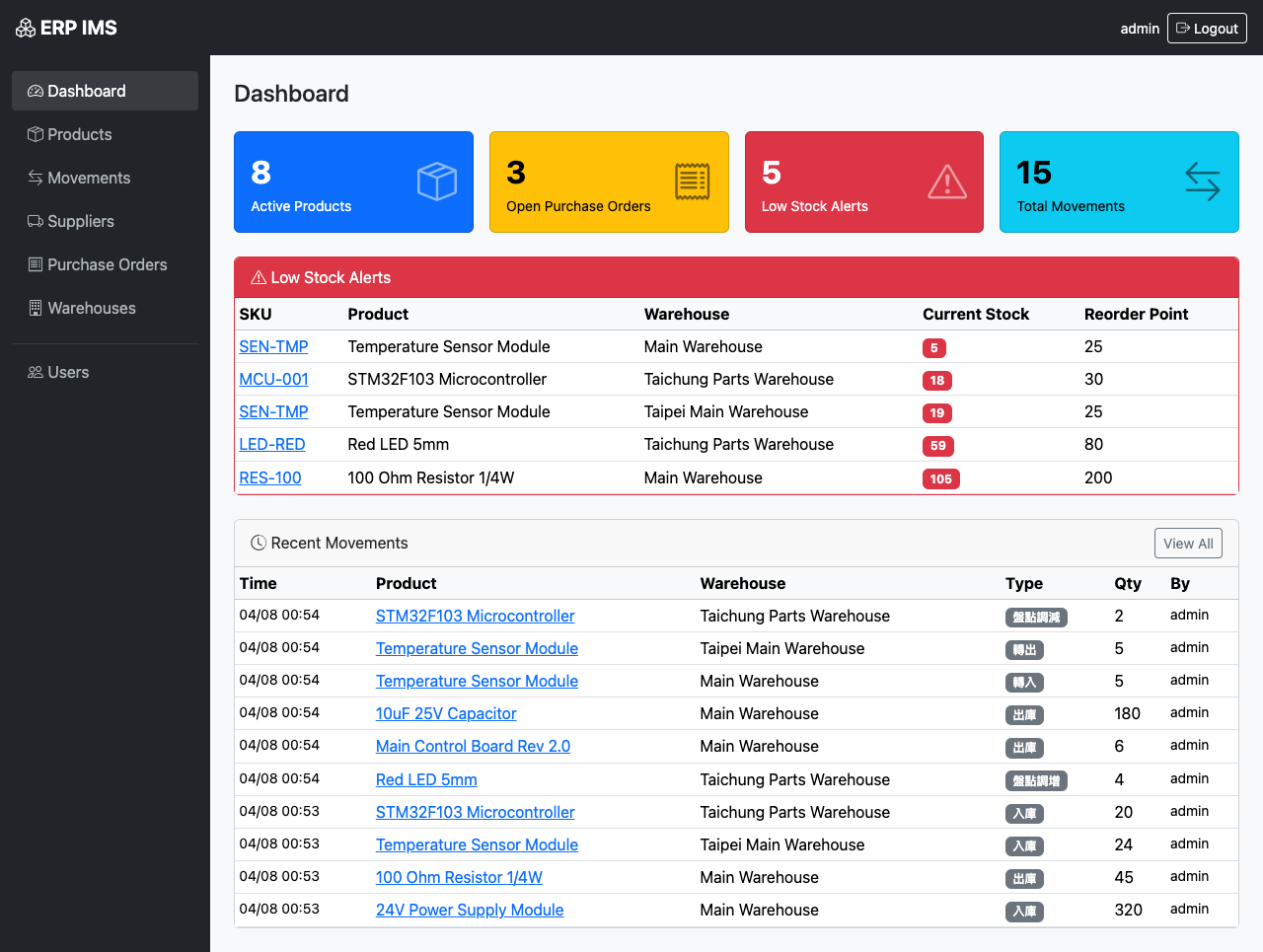
Open the app and immediately see low-stock alerts, open purchase orders, and recent activity.
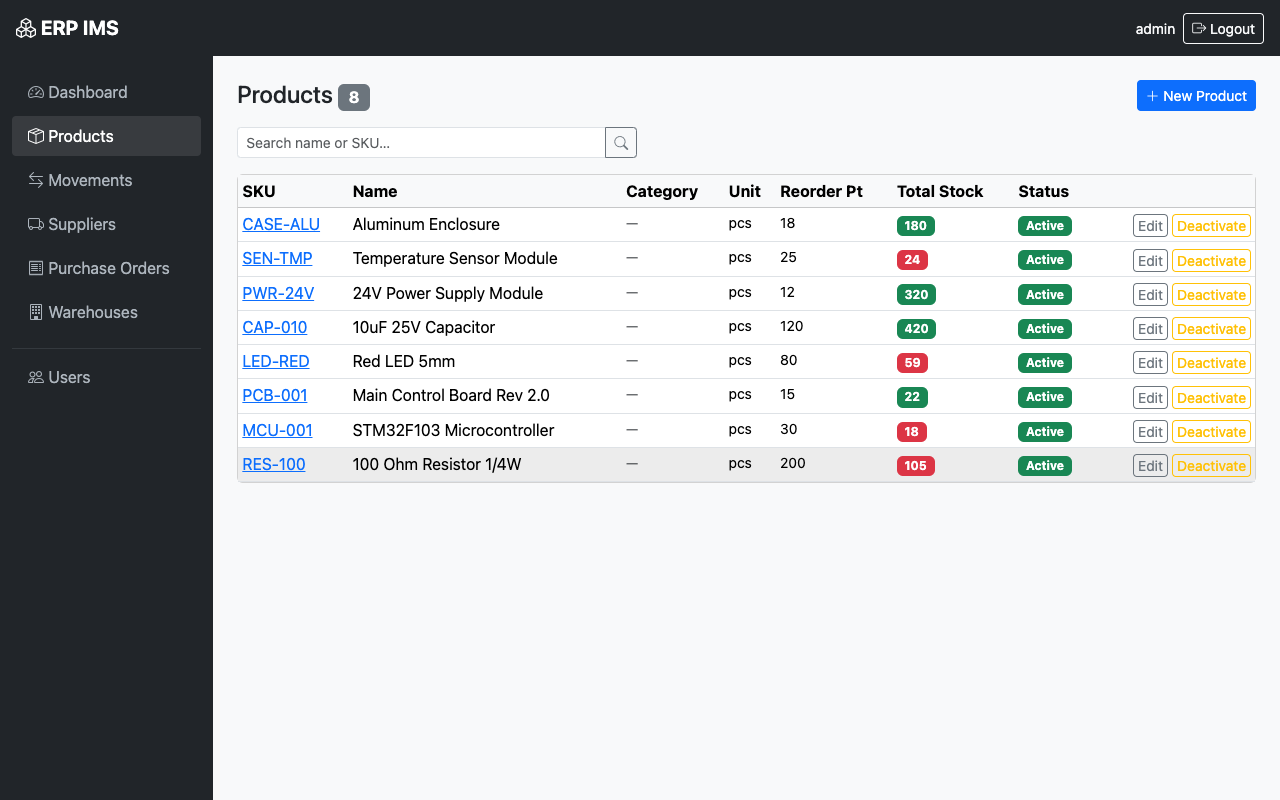
Searchable product records with stock visibility across warehouses.
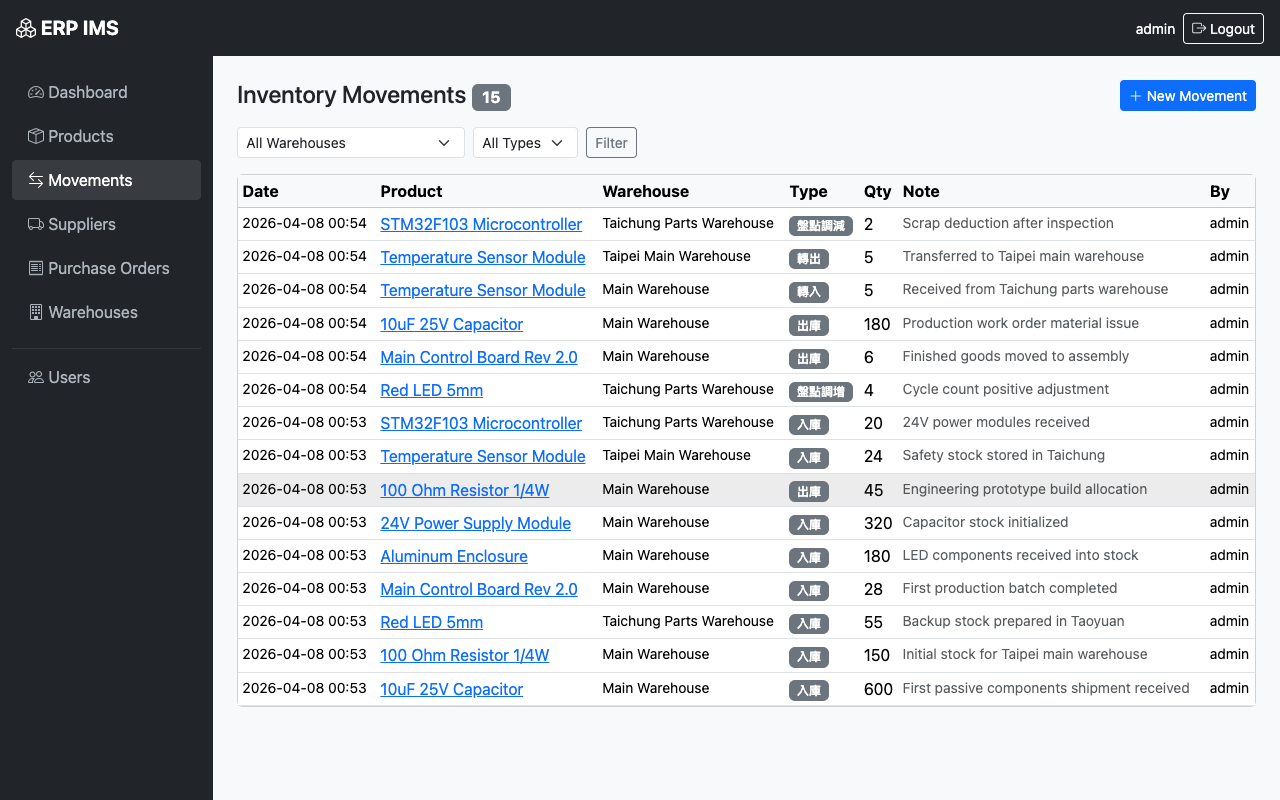
Trace every stock change with a readable, filterable activity log.
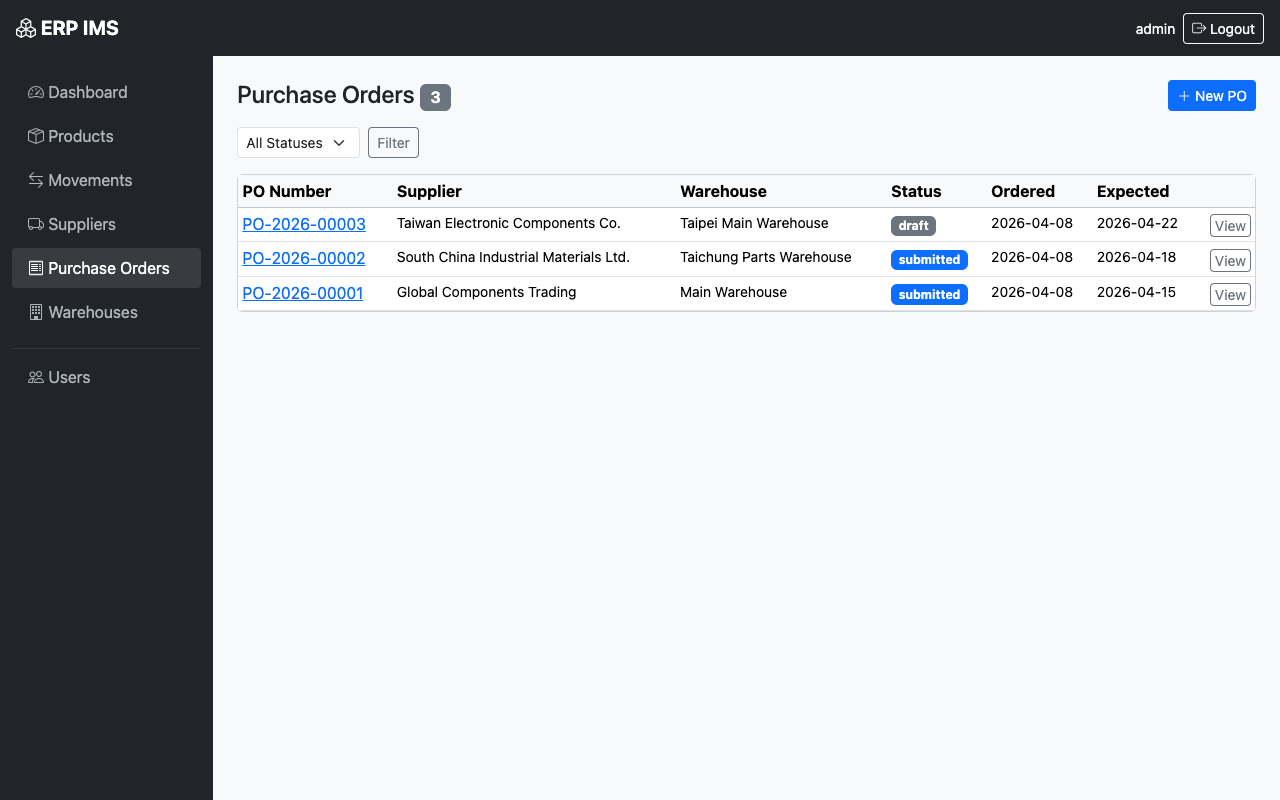
Move from draft to submitted to received with a workflow teams can actually follow.
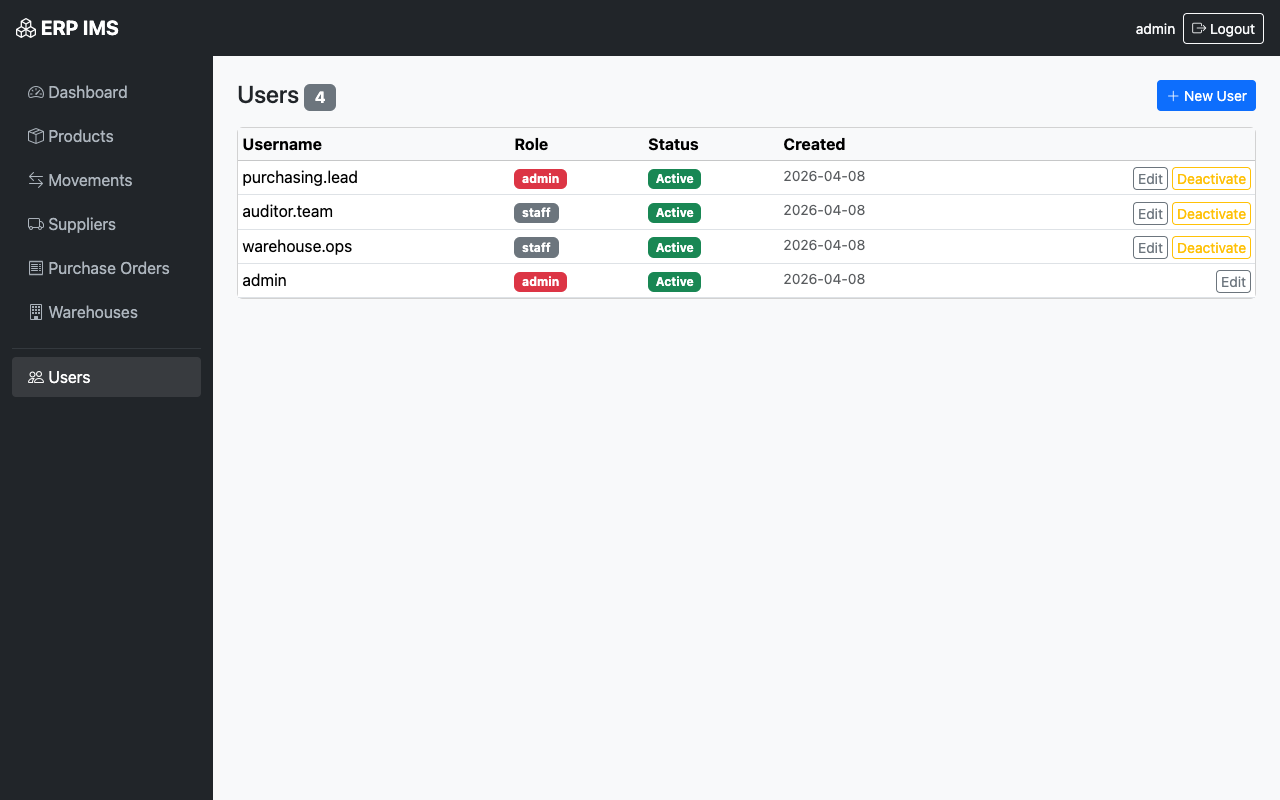
Support admin and staff roles without adding unnecessary access complexity.
Operational fit
Why this page matters
Deployment
docker compose up --buildERP IMS ships well for self-hosted environments. The default Compose setup runs the web app on port 8000 and stores SQLite data in a persistent Docker volume.
Default login: admin / admin@12345
Change the secrets and admin password before production use.
FAQ
No. The current story is strongest for small and mid-sized teams that want practical inventory control without a large ERP rollout.
Yes. The page already positions Docker Compose and self-hosting as the default path, which is one of the clearest differentiators in the product story.
Products, stock movements, warehouses, suppliers, purchase orders, dashboard visibility, and basic role-based access are all represented in the UI shown here.
Authentication hardening, backup and restore, deployment docs, and reporting depth. Those are the items that separate a strong demo from a confident rollout.
Next step
This version now tells a clearer story: what ERP IMS is, who it is for, what it replaces, how it deploys, and why a small team can adopt it without a long implementation cycle.